If you’re wondering how to clean fabric sofa surfaces at home, you’re not alone.
Fabric sofas are comfortable and stylish, but they can easily collect dust, food crumbs, pet hair, spills, and everyday dirt. Without proper cleaning, stains and odors can build up over time, making your sofa look worn and less inviting.
The good news is that regular maintenance and the right cleaning methods can help keep your sofa looking fresh and clean.
In this guide, we’ll cover how do you clean a fabric sofa, how to remove common stains, and when it may be time to consider professional cleaning.
How to Clean Fabric Sofa at Home
Before cleaning your sofa, check the manufacturer’s cleaning label if available. Some fabrics can tolerate water-based cleaning, while others may require special cleaning products.
Step 1: Vacuum the Entire Sofa
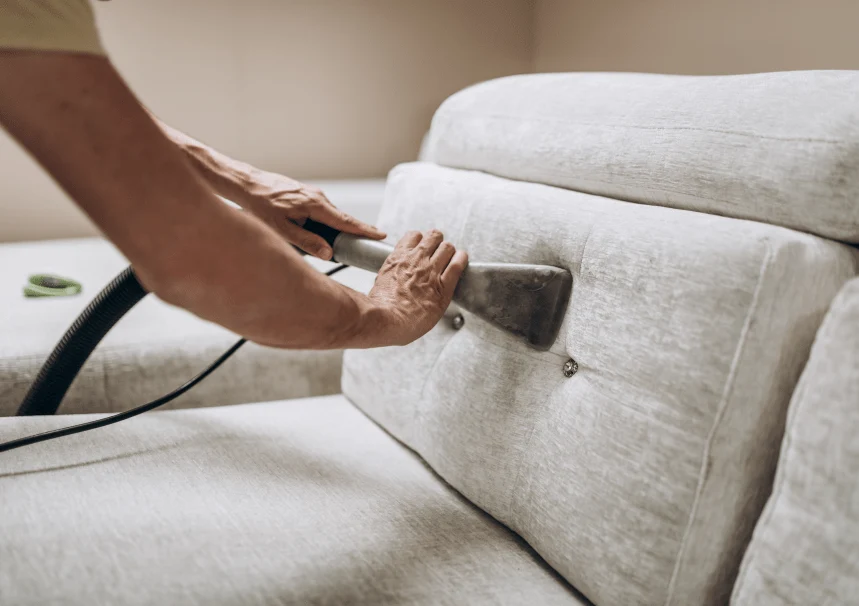
Before tackling stains or applying any cleaning solution, start by vacuuming the entire sofa to remove loose dirt, dust, pet hair, and other debris.
Use a vacuum cleaner with a brush attachment and carefully clean the cushions, armrests, backrests, and all exposed fabric surfaces.
Pay special attention to seams, corners, and crevices where dirt tends to accumulate, and remove the cushions if possible so you can vacuum underneath them as well.
Completing this step first helps prevent dirt from spreading deeper into the fabric during the cleaning process and makes the rest of the cleaning more effective.
Step 2: Prepare a Gentle Cleaning Solution
Once the sofa has been vacuumed, prepare a mild cleaning solution that is suitable for most fabric sofas.
Fill a small bowl with warm water and add a few drops of mild dish soap, then stir gently until the soap is mixed into the water.
Avoid creating too many soap bubbles, as excessive suds can leave residue on the fabric and make rinsing more difficult.
A gentle solution is usually sufficient for removing everyday dirt and light stains without damaging the upholstery.
Step 3: Spot Test First
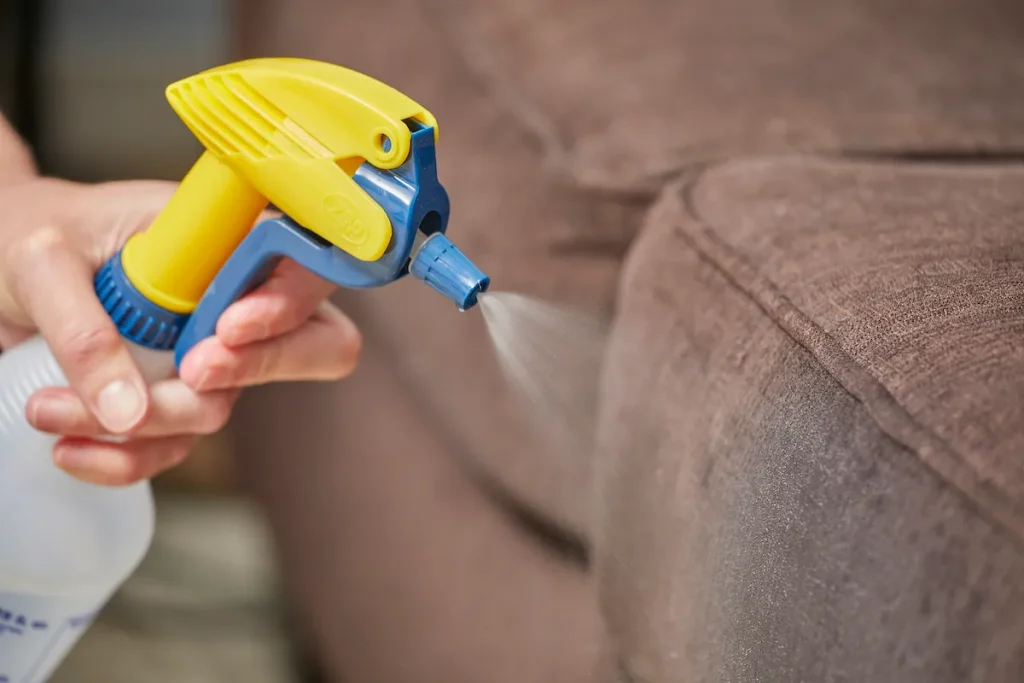
Before cleaning any visible area of the sofa, it is important to perform a spot test on a small, hidden section of the fabric.
Lightly apply a small amount of the cleaning solution to an inconspicuous area and wait a few minutes to observe the results.
Check for any signs of discoloration, fading, shrinking, or fabric damage before proceeding with the rest of the sofa.
This simple precaution can help prevent accidental damage and ensure the cleaning solution is safe to use on your upholstery.
Step 4: Clean the Fabric Surface
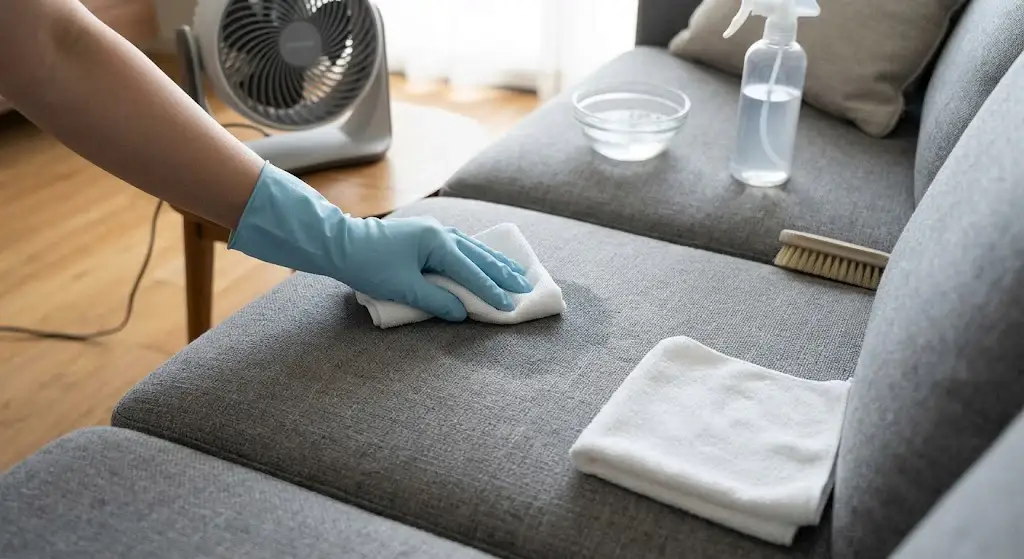
After confirming that the cleaning solution is safe, lightly dampen a clean microfiber cloth with the mixture and begin cleaning the sofa.
Work in small sections and use gentle circular motions to lift dirt from the fabric without causing unnecessary wear.
Focus on areas that appear visibly dirty, but avoid soaking the upholstery, as excessive moisture can penetrate the cushions and lead to water stains, unpleasant odors, or mold growth.
Taking your time and cleaning gradually will help achieve a more even and effective result.
Step 5: Allow the Sofa to Dry Completely
Once the cleaning is complete, allow the sofa to dry naturally before using it again. Ensure the room is well ventilated by opening windows or using fans to improve airflow and speed up the drying process.
Avoid using excessive heat or placing the sofa under direct sunlight, as this may damage certain fabrics or cause discoloration.
It is also important not to sit on the sofa until it is completely dry, as doing so can affect the cleaning results and trap moisture within the upholstery.
Also Read: 12 Pre Move In Cleaning Checklist Before Moving Into a New House
How to Remove Food, Drink, and Pet Stains on Fabric Sofa
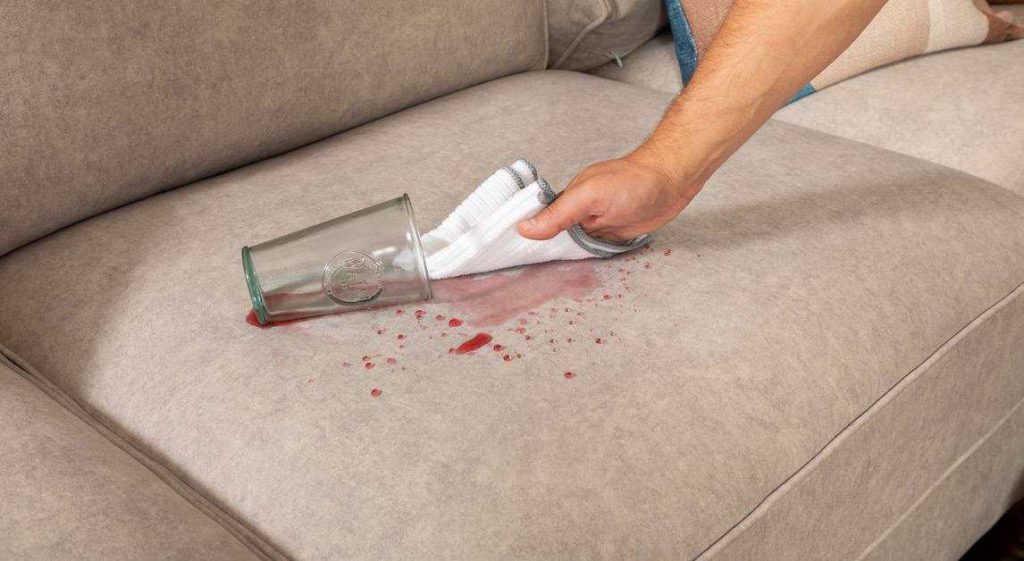
Food spills, beverages, and pet accidents are among the most common stains found on fabric sofas.
Coffee and tea, in particular, are frequently spilled drinks that can leave noticeable stains if not cleaned promptly. While the source of the stain may differ, the basic cleaning approach is often similar.
Steps:
- Blot the spill or excess moisture immediately using a clean cloth
- Avoid rubbing or scrubbing the stain, as this can spread it further and damage the fabric fibers
- Apply a mild soap solution or an upholstery-safe cleaner to the affected area
- Gently dab or blot the stain until it begins to lift
- Repeat if necessary and allow the area to dry completely
The sooner you treat the stain, the better the chances of removing it completely.
For pet accidents that leave lingering odors, professional cleaning may be needed to fully eliminate smells trapped within the upholstery.
How to Remove Grease or Oil Stains from Fabric Sofa
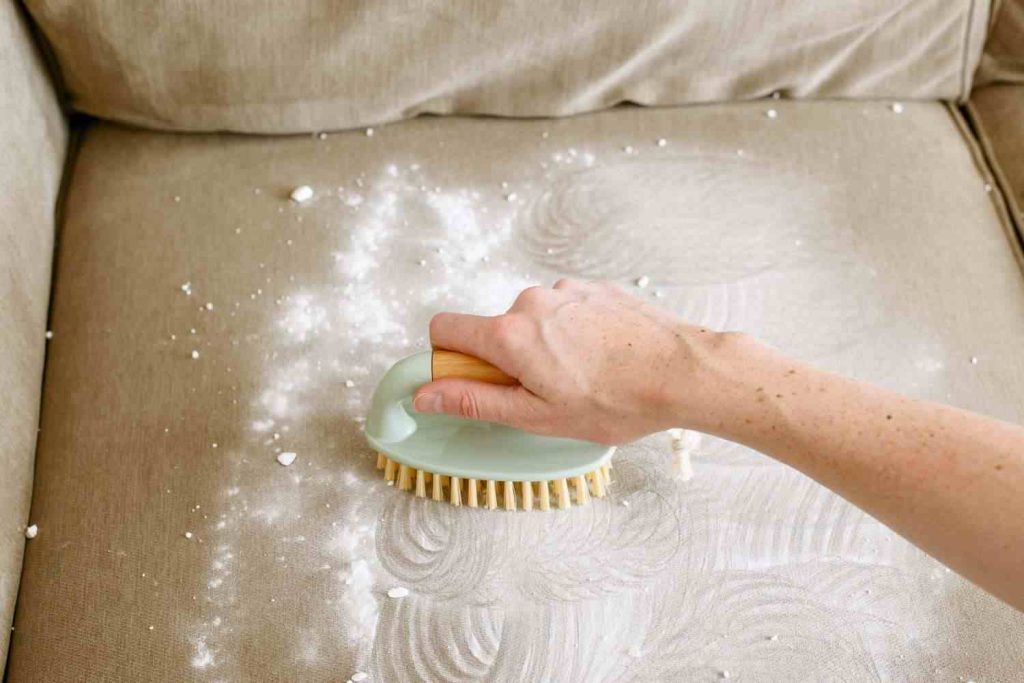
Oil stains can be particularly challenging to remove because grease and oil tend to soak deep into the fabric fibers rather than remaining on the surface.
Unlike water-based stains, oil does not evaporate easily, which means it can leave behind dark marks and attract additional dirt if not treated properly.
Acting quickly can significantly improve your chances of removing the stain completely.
Steps:
- Blot the stain gently with a clean paper towel or cloth to absorb as much excess oil as possible. Avoid rubbing, as this can spread the grease further into the fabric.
- Sprinkle a generous amount of baking soda over the affected area. Baking soda is highly absorbent and can help draw oil out of the upholstery fibers.
- Leave the baking soda on the stain for several hours, or ideally overnight for larger or older stains.
- Vacuum away the baking soda thoroughly using a vacuum cleaner with an upholstery attachment.
- Inspect the area. If the stain remains, prepare a mild cleaning solution using warm water and a few drops of dish soap, which is designed to break down grease.
- Dampen a clean microfiber cloth with the solution and gently blot the stained area. Work from the outside of the stain toward the center to prevent spreading.
- Use a separate clean cloth dampened with plain water to remove any soap residue.
- Allow the area to air dry completely before using the sofa again.
Baking soda helps absorb excess oil before deeper cleaning, while a gentle soap solution can break down any remaining grease.
For older or heavily set-in oil stains, multiple treatments may be necessary, and professional upholstery cleaning may provide the best results.
When Should You Hire Fabric Sofa Cleaning Services?
While routine maintenance can be done at home, some situations are better handled by professionals.
You may want to consider fabric sofa cleaning services if:
- Stains won’t come out
- The sofa has unpleasant odors
- There is significant dirt buildup
- The upholstery hasn’t been cleaned for years
- You want a deeper and more thorough clean
Professional cleaning equipment can remove dirt, bacteria, and allergens that household cleaning methods may not reach.
Let Sparkling Nest Handle Your Sofa Cleaning in Singapore
Not everyone has the time, tools, or expertise to deep clean a fabric sofa properly. If your sofa is looking dull, stained, or overdue for a refresh, Sparkling Nest is here to help.
We provide professional fabric sofa cleaning services in Singapore, helping homeowners restore the cleanliness and comfort of their upholstery.
Whether you need help with stubborn stains, unpleasant odors, pet-related messes, or general sofa maintenance, our experienced team uses suitable cleaning methods to achieve a deeper and more effective clean.
Instead of spending hours scrubbing your sofa yourself, let Sparkling Nest help bring your upholstery back to its best condition so you can enjoy a cleaner, fresher, and more comfortable home.
Contact us now to book our service or visit us our office at 10 Ang Mo Kio Industrial Park 2A, #01-22, Singapore 568047.
FAQ About Fabric Sofa Cleaning
How do you clean a fabric sofa without damaging it?
The safest approach is to vacuum regularly, use a mild cleaning solution, spot test first, and avoid over-wetting the fabric. Always follow the manufacturer’s care instructions whenever possible.
How often should a fabric sofa be cleaned?
For most households, vacuuming should be done weekly, while deeper cleaning is recommended every 6 to 12 months depending on usage.
Can baking soda clean a fabric sofa?
Yes. Baking soda can help absorb odors and oil-based stains from fabric upholstery. It is commonly used as part of DIY sofa cleaning methods.
Can I remove fabric sofa stains myself?
Many fresh stains can be removed at home using gentle cleaning methods. However, older, deeper, or stubborn stains may require professional treatment.
Is professional sofa cleaning worth it?
Professional cleaning can help remove dirt, allergens, bacteria, odors, and stains that are difficult to eliminate using standard household cleaning methods.